
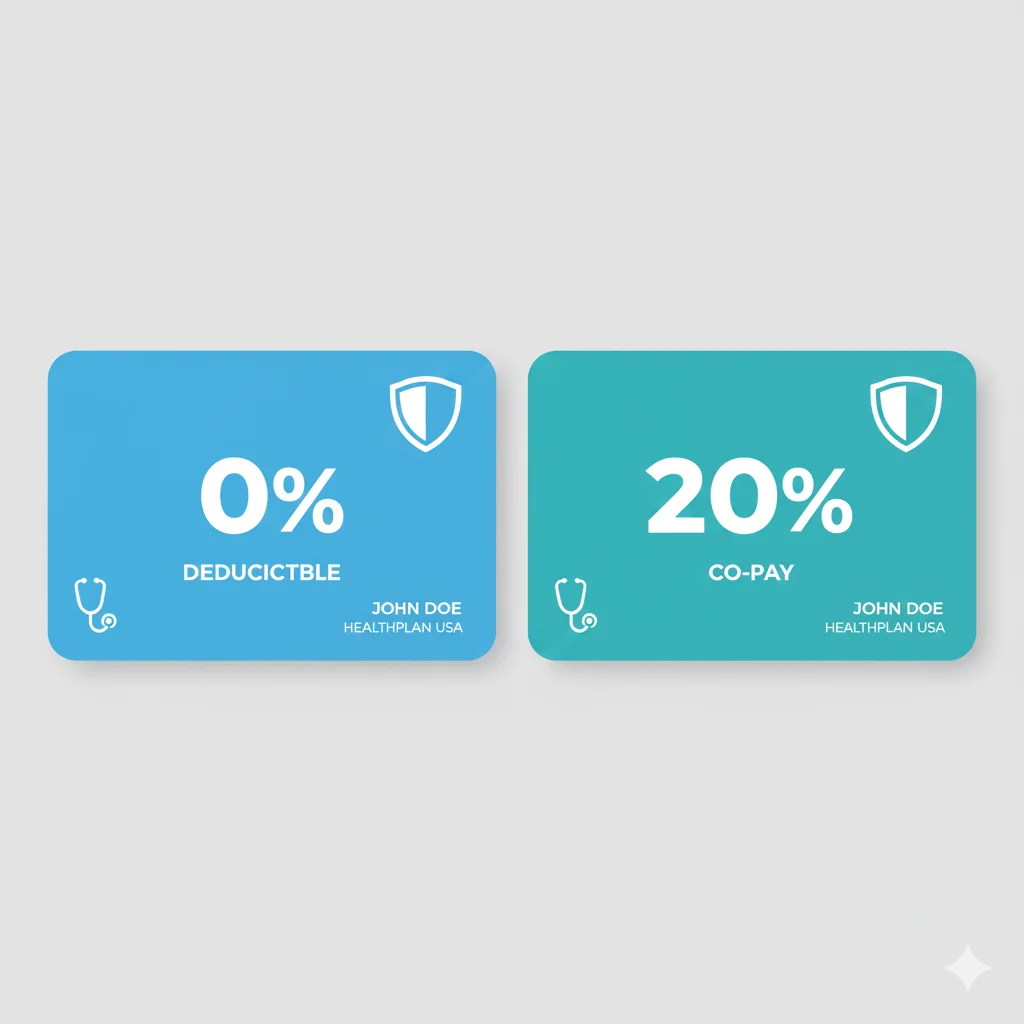
Ever stared at your health insurance plan details, feeling like you’re decoding an ancient scroll? You see words like “deductible,” “copay,” and then you hit this one: “0% coinsurance.” You might have blinked, wondering, “Is that good? Does that mean I pay nothing? Is it a trick?” I remember the first time I saw it on my new plan’s summary. I spent 20 minutes cross-referencing glossaries, half-convinced it was a typo. If you’ve been there, feeling that mix of hope and confusion, you’re in the right place. Let’s unravel this mystery together so you can finally understand exactly what you’re signing up for and how it affects your next doctor’s visit.
✨ 0 coinsurance means you pay 0% of the cost for covered medical services after you’ve met your plan’s deductible. In short, your insurance company covers 100% of the allowed amount. It’s a feature of very generous health plans and is excellent for your wallet.
🧠 What Does 0 Coinsurance Mean in Health Insurance?
Let’s break it down without the insurance jargon. “Coinsurance” is the percentage of a medical bill you are responsible for paying after you’ve met your annual deductible. It’s a form of cost-sharing between you and your insurer.
Therefore, 0 coinsurance literally means your share is zero percent. Once your deductible is satisfied for the year, your insurance plan steps in and pays 100% of the cost for any covered services that fall under the coinsurance clause. You pay nothing out-of-pocket for those services (though copays for things like doctor visits may still apply separately).
Simple Example: You need an MRI that costs $1,500. You’ve already met your $1,500 annual deductible.
- With 20% coinsurance: You pay $300 (20% of $1,500), insurance pays $1,200.
- With 0% coinsurance: You pay $0, insurance pays the full $1,500.
In short: 0 Coinsurance = 0% You Pay + 100% Insurance Pays (after deductible).
📋 Where Is 0 Coinsurance Commonly Found?
You won’t find this term in casual texting, but it’s a crucial piece of financial language in specific, important contexts:
- 🏥 Health Insurance Plan Documents: This is its primary home. Look for it in your:
- Summary of Benefits and Coverage (SBC): Usually in a row labeled “Coinsurance.”
- Evidence of Coverage (EOC) booklet.
- Plan comparison charts when shopping for insurance.
- 💼 Employer-Sponsored Health Plans: Many comprehensive employer plans offer 0% coinsurance as a key benefit, especially in Platinum-tier plans.
- 🛡️ Medicare Plans: Some Medicare Advantage (Part C) or Medigap (Supplemental) plans may offer 0% coinsurance for certain services like hospital stays.
- 🔎 Insurance Broker/Agent Explanations: A good agent will highlight 0 coinsurance as a major advantage of a plan.
Tone: It is a formal, financial, and contractual term. It is not slang. Understanding it is critical for making informed healthcare decisions.
💡 Examples of 0 Coinsurance in Real Scenarios
Let’s see how this plays out in realistic healthcare situations. Assume the annual deductible has been met in each example.
Example 1: Specialist Visit & Surgery
Patient: “My dermatologist says I need a minor surgical procedure. What will my cost be?”
Insurance Customer Service: “I see your plan has 0% coinsurance for specialist services and outpatient surgery after the deductible. Since you’ve met your deductible, your cost for the procedure itself will be $0.”
Example 2: Prescription Medication (Tier 4)
Pharmacy Tech: “Your specialty medication is ready. The price is $2,400.”
Patient: “Can you run it through my insurance? My plan shows 0% coinsurance for drugs after the deductible.”
System processes.
Pharmacy Tech: “You’re correct! Your plan covers it at 100%. Your cost today is $0.”
Example 3: Hospital Inpatient Stay
Hospital Billing Dept: “We’re calling about your 3-day hospital stay. The total covered charges are $18,000.”
Patient: “My plan has a $500 deductible and then 0% coinsurance for hospitalization.”
Hospital Billing Dept: “That’s right. Our records show you’ve paid your deductible. You owe $0 for this stay. The insurance company will pay us directly.”
Example 4: Diagnostic Testing
Friend: “Ugh, I had to get an MRI and my 20% coinsurance was $400!”
You: “That’s tough. I had one last month too. My plan has 0 coinsurance after the deductible, so I didn’t pay anything extra for it.”
Example 5: Mental Health Services
Therapist’s Office: “Just a heads-up, each therapy session is $150.”
You: “Thanks! I checked my benefits, and I have 0% coinsurance for behavioral health outpatient visits after my deductible. So these should be fully covered now.”
✅ When to Use and When Not to Use a 0 Coinsurance Plan
Understanding when this feature is most valuable helps you choose the right plan.
✅ WHEN TO CHOOSE A PLAN WITH 0 COINSURANCE:
- You expect high medical costs for the year (chronic condition, planned surgery, pregnancy).
- You value predictable costs and want to avoid surprise bills after meeting your deductible.
- You can afford a higher monthly premium (Plans with 0 coinsurance often have higher premiums).
- You want maximum financial protection from large, unforeseen medical events.
❌ WHEN A DIFFERENT PLAN MIGHT BE BETTER:
- You are young, healthy, and rarely see a doctor. A plan with a lower premium and higher coinsurance might save you money overall.
- Your budget is very tight month-to-month, and you cannot handle a higher premium, even for better coverage later.
- The plan has other trade-offs, like a very high deductible or a very restricted network, that don’t work for you.
| Context | Example Plan Feature | Why It Works / Doesn’t Work |
|---|---|---|
| Managing a Chronic Condition | 0% Coinsurance for specialist visits & meds | Works: Eliminates ongoing cost burden after deductible. |
| Emergency Protection | 0% Coinsurance for hospitalization | Works: Provides ultimate peace of mind against six-figure bills. |
| Healthy, Low-Use Individual | 20% Coinsurance, much lower premium | May Work Better: Saves monthly cash for unlikely events. |
| Formal Insurance Quote | “This Platinum plan features 0% coinsurance.” | Works: Precisely describes the benefit structure. |
🔄 Similar Health Insurance Cost-Sharing Terms
It’s easy to mix these up. Here’s a quick comparison table.
| Term | Meaning | When It Applies |
|---|---|---|
| Copayment (Copay) | A fixed dollar amount you pay for a service. | Usually at the time of service (e.g., $30 for a doctor visit). |
| Deductible | The amount you pay first each year before insurance shares costs. | At the start of the plan year for most services. |
| Coinsurance | The percentage you pay after the deductible is met. | After deductible, before out-of-pocket maximum. |
| Out-of-Pocket Maximum | The absolute limit you pay in a year. After this, insurance pays 100%. | Once your total payments (deductible + copays + coinsurance) hit this cap. |
| Out-of-Network Coinsurance | A higher percentage you pay for using non-network providers. | When you choose a doctor/hospital not in your plan’s network. |
🏆 The Pros and Cons of 0 Coinsurance
Advantages:
- Predictability: Once your deductible is met, your major healthcare costs for the year are essentially over.
- Financial Safety Net: Provides incredible protection against catastrophic, budget-breaking medical bills.
- Encourages Care: Removes financial barriers to seeking necessary follow-up care, specialist visits, or procedures after meeting your deductible.
Disadvantages:
- Higher Premiums: You pay for this protection through a significantly higher monthly bill.
- High Deductible Possible: Some 0% coinsurance plans pair with high deductibles. You must be able to afford the deductible first.
- Not Always Cost-Effective: For people with minimal healthcare needs, you may pay more in premiums than you save on coinsurance.
🧩 How 0 Coinsurance Works with Your Deductible and Max
This is the critical part! 0 coinsurance does NOT mean you never pay.
- First, you must pay 100% of covered costs until you meet your annual deductible.
- Then, the 0% coinsurance kicks in. You pay $0, insurance pays 100%.
- Importantly, all the money you spent on your deductible counts toward your out-of-pocket maximum. With 0% coinsurance, hitting your deductible often means you’ve also hit your out-of-pocket max for the year.
🤔 Common Misconceptions About 0 Coinsurance
- Myth: “0 coinsurance means I never pay for anything.”
- Truth: You still pay your premium and deductible. You may also have copays for office visits that apply separately.
- Myth: “It’s the same as having no deductible.”
- Truth: They are separate concepts. You can have a high deductible and 0 coinsurance.
- Myth: “All services are covered at 0%.”
- Truth: Only services subject to coinsurance are covered at 0%. Some services (like primary care visits) may only require a copay, which is different.
💰 Is a 0 Coinsurance Plan Right For You?
Ask yourself these questions:
- What is my health history? (Frequent care = likely a good fit).
- Can I handle the monthly premium? (Run the annual total: Premium x 12).
- Do I have savings to cover the deductible if needed?
- Am I looking for peace of mind above all else?
🔍 How to Find Out If Your Plan Has 0 Coinsurance
- Log into your insurance provider’s website and find your “Summary of Benefits.”
- Look for the “Coinsurance” column or row.
- See what percentage is listed for services like “Hospital Care,” “Specialist Visits,” or “Diagnostic Tests.”
- Call the member services number on your insurance card and ask directly: “For [specific service], what is my coinsurance rate after the deductible?”
❓ FAQs About 0 Coinsurance
Q: Does 0 coinsurance mean free healthcare?
A: No. You must still pay your monthly premium and meet your annual deductible before the 0% coinsurance benefit applies.
Q: Is 0 coinsurance good?
A: It is an excellent feature for financial protection after you meet your deductible. It generally indicates a high-quality, comprehensive plan, but you must weigh it against the higher premium cost.
Q: What’s better: 0% coinsurance or a $0 deductible?
A: It depends. A $0 deductible gets you to full coverage faster. But if you have major expenses, 0% coinsurance after a deductible can lead to lower total annual costs. You need to model your expected care.
Q: Do I still pay a copay with 0 coinsurance?
A: Possibly yes. Copays are often separate from coinsurance. You might pay a $20 copay for a doctor visit (fixed amount) while also having 0% coinsurance for surgeries (percentage).
📝 Conclusion
0 coinsurance is the golden ticket of health insurance cost-sharing. It’s your plan’s promise that after you’ve paid your deductible for the year, they’ll handle 100% of the bill for covered services. This translates to unmatched predictability and security from medical debt. However, this top-tier benefit comes at the cost of a higher monthly premium. When evaluating a plan, don’t look at 0 coinsurance in isolation. Consider it as part of the whole puzzle: your deductible, premium, out-of-pocket maximum, and network. If you anticipate needing significant care, the math often makes a plan with 0% coinsurance the most financially sound and least stressful choice for the year ahead. Now, you can look at that plan document not with confusion, but with the confidence of knowing exactly what that “0%” really means for your health and your wallet