
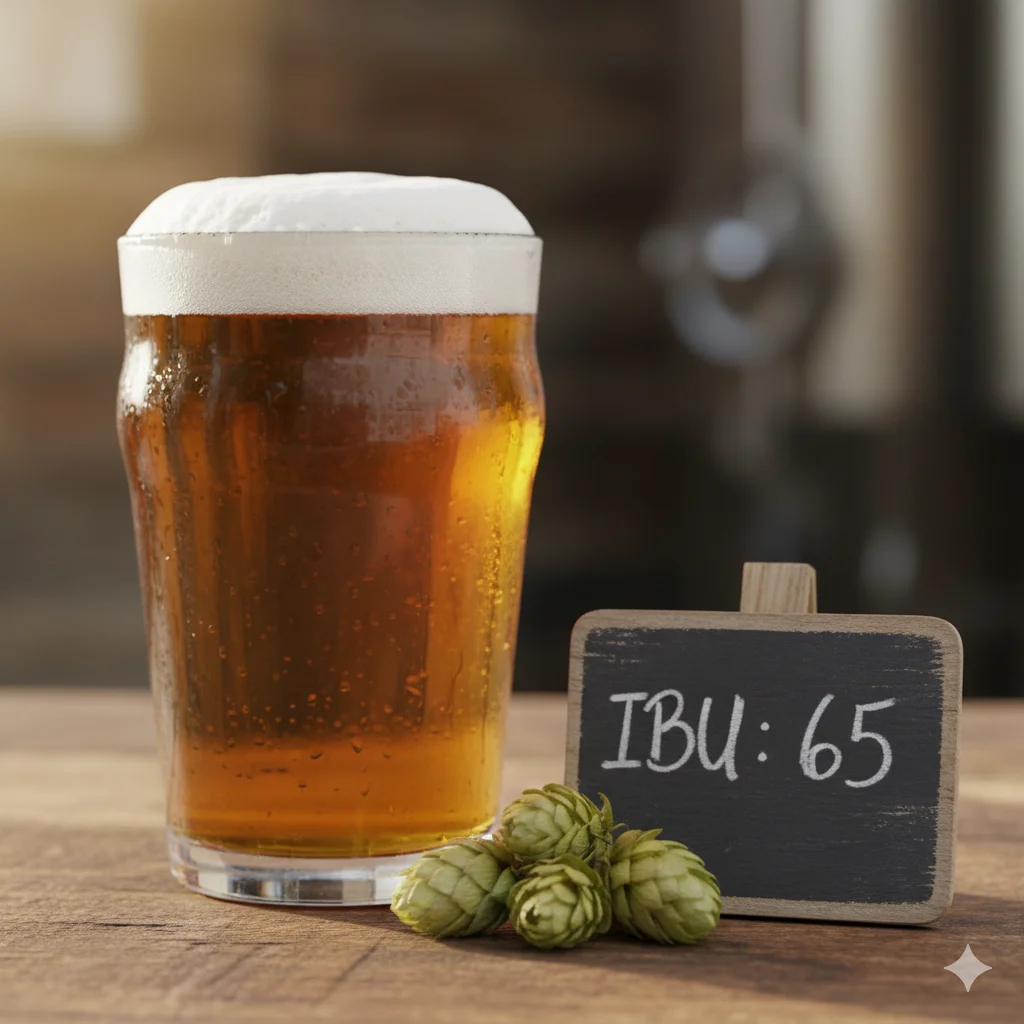
You’re scrolling through a craft beer menu or staring at a can’s label, and there it is: “IBU: 55.” You’ve seen it a dozen times. Maybe you guessed it was something about bitterness, but what does IBU actually mean? Is it a brewing secret code? A measure of alcohol strength? If you’ve ever felt a twinge of confusion but nodded along anyway, you’re not alone. That tiny acronym holds the key to understanding why one beer tastes like a crisp, refreshing pine forest and another like a gentle, malty hug. Let’s crack the code.
IBU stands for “International Bitterness Units.” It’s a technical, scientific scale used by brewers to measure the concentration of bittering compounds, primarily from hops, in a finished beer. In short, it tells you how bitter a beer will taste.
🧠 What Does IBU Mean?
Let’s break it down word by word. International Bitterness Units is a standardized measurement, adopted globally, that quantifies iso-alpha acids—the chemical compounds derived from hops that create bitterness. Think of it like the Scoville Scale for chili peppers, but for beer bitterness.
The IBU number itself represents parts per million (ppm) of these iso-alpha acids. So, a beer with 20 IBUs has 20 parts per million of bittering compounds. In practice, the higher the IBU, the more bitter the beer will taste to most people. However—and this is crucial—IBU measures potential bitterness. Your actual perception of bitterness is influenced heavily by the beer’s malt sweetness, carbonation, and even your own biology.
In short: IBU = International Bitterness Units = A scientific measure of a beer’s bittering compounds from hops.
📊 The IBU Scale: From Mild to Wild
To make sense of the numbers, here’s a general guide to the IBU spectrum you’ll find in the beer world:
- 1-20 IBU: Subtle to no perceptible bitterness. Includes American Light Lagers, Belgian Wits, Munich Helles.
- 21-40 IBU: Noticeable but balanced bitterness. The sweet spot for Pilsners, Amber Ales, Porters, and many Pale Ales.
- 41-60 IBU: Pronounced, assertive bitterness. Classic range for American IPAs (India Pale Ales).
- 61-80 IBU: Aggressively bitter. Found in Double/Imperial IPAs and some bold American Pale Ales.
- 80-100+ IBU: Extreme bitterness. Territory of Triple IPAs, Imperial Stouts, and hop-bomb experimental beers. At this point, the human palate often can’t distinguish much increase.
🌿 What Creates IBU in Beer? (The Hop Factor)
IBU isn’t a random number; it’s engineered by the brewer using one key ingredient: hops. Hops are the cone-like flowers of the Humulus lupulus plant. They contribute aroma, flavor, and, most importantly for IBU, bitterness.
Bitterness is extracted when hops are boiled in the sweet wort (unfermented beer). The longer the hops boil, the more iso-alpha acids are isomerized and dissolved, increasing the IBU. Brewers use specific “bittering hops” added early in the boil primarily for this purpose. Hops added later or after fermentation contribute more to aroma and flavor with less impact on IBU.
📱 Where Do You See IBU?
You’ll encounter IBU in places where beer geeks and curious drinkers gather:
- 🍻 Craft Beer Can/Bottle Labels: A hallmark of modern craft brewing, often displayed prominently.
- 📋 Brewery Taproom Menus & Digital Beer Lists: Listed next to ABV (alcohol content) as a key statistic.
- 🗣️ Beer Review Websites & Apps (Untappd, BeerAdvocate): A core metric in user reviews and beer profiles.
- 🎓 Homebrewing Forums & Recipes: Crucial for brewers designing and cloning beers accurately.
- 🛒 Retail Descriptions on sites like Drizly or Total Wine.
It’s a technical specification, not casual slang. Using it in conversation marks you as someone interested in the details of beer.
🍺 Examples of Beers & Their Typical IBU Ranges
Let’s put real beer styles to the numbers:
- Bud Light / Coors Light: ~10 IBU
- Guinness Draught: ~25 IBU
- Sierra Nevada Pale Ale: ~38 IBU
- Lagunitas IPA: ~51 IBU
- Dogfish Head 60 Minute IPA: ~60 IBU
- Stone Ruination Double IPA: ~100+ IBU
- Founders KBS (Imperial Stout): ~70 IBU (masked by sweetness!)
⚖️ The Big Myth: IBU vs. Perceived Bitterness
Here’s the most important lesson: A high IBU does NOT always mean a beer will taste intensely bitter.
Your taste buds are fooled by balance. A massive, sweet Imperial Stout with 70 IBUs will often taste less bitter than a dry, crisp IPA with 55 IBUs. Why? The stout’s intense roasted malt and chocolate sweetness counterbalance and mask the bitterness. The IPA has less malt sweetness to offset it, so the bitterness shines through.
Perceived Bitterness = IBU – (Malt Sweetness + Other Flavors). Always consider IBU as one piece of the flavor puzzle.
✅ When to Use and When Not to Use IBU as a Guide
✅ WHEN TO USE IBU:
- Choosing Between Similar Beer Styles: e.g., “This IPA has 60 IBU, that one has 90—I’ll try the 60 first.”
- Understanding Your Preferences: If you love a 40 IBU Pale Ale, you’ll likely enjoy beers in that range.
- Homebrewing or Technical Discussion: It’s the precise, correct term for recipe formulation.
- Filtering Out Extreme Beers: Avoiding the 100+ IBU hop-monsters if that’s not your thing.
❌ WHEN NOT TO SOLELY RELY ON IBU:
- Judging a Beer’s “Strength” or Alcohol Content: That’s ABV (Alcohol By Volume). A barleywine can be low-IBU but high-ABV.
- Assuming Taste Experience: Don’t skip a 70 IBU stout because you don’t like 70 IBU IPAs.
- In Casual Bar Orders: Saying “I’ll take a beer under 30 IBU” might get you an eye-roll. It’s better to describe flavor: “I’d like something crisp and not too bitter.”
- As the Only Measure of Quality: A balanced, flavorful beer at 20 IBU can be a masterpiece.
IBU in Context: A Practical Table
| Context | Example Phrase | Why It Works / Doesn’t |
|---|---|---|
| At a Craft Beer Bar | “I usually enjoy IPAs around 60 IBU. What do you recommend on tap?” | Shows informed preference, helps the bartender guide you. |
| Reading a Label | “Hmm, this porter is only 25 IBU. It’ll be more malty than hoppy.” | Using IBU to infer likely flavor profile. |
| Brewing with Friends | “Let’s aim for 45 IBUs in this pale ale recipe.” | Correct, technical use in recipe design. |
| Casually Ordering | “Give me something light and low-IBU.” | Less Effective. Better: “Something light and easy-drinking, like a lager or blonde ale.” |
🔄 Similar Beer Acronyms & Metrics
IBU has friends on the beer label. Here are other key terms you’ll often see alongside it.
| Acronym | Stands For | What It Measures | When It’s Useful |
|---|---|---|---|
| ABV | Alcohol By Volume | The percentage of alcohol in the beer. | Gauging strength and potency. The “how strong is it?” number. |
| SRM | Standard Reference Method | The color of the beer, from pale yellow (2) to black (40+). | Predicting malt character and visual appeal. |
| FG / FG | Final Gravity | The density of the beer after fermentation, indicating sweetness/body. | Used in brewing to determine if fermentation is complete and to calculate ABV. |
| BU:GU | Bitterness to Gravity Ratio | The ratio of IBUs to the original sugar content (Original Gravity). | A advanced gauge of balance. A 0.5 ratio is balanced, >0.7 is bitter. |
❓ FAQs About IBU
What is a good IBU for a beginner?
Start with beers in the 10-30 IBU range, like lagers, wheat beers, amber ales, or brown ales. They offer mild, approachable bitterness.
What’s the highest IBU beer possible?
Theoretically, 100+ is detectable. Beers have been brewed with 1,000+ IBUs, but it’s a scientific novelty. The human palate maxes out on perceived bitterness around 100-120 IBU.
Does high IBU mean more alcohol?
No. IBU measures bitterness, ABV measures alcohol. A high-IBU IPA can be 6% ABV, while a low-IBU Belgian Tripel can be 10% ABV.
Why do some beers not list IBU?
Many large-scale commercial beers (like mainstream lagers) don’t, as they market to a general audience. Some craft brewers also omit it to discourage number-focused drinking, preferring you to focus on taste.
Is a low IBU beer sweet?
Not necessarily. Low IBU means less bitterness, but the beer could be dry, tart, sour, or watery. Sweetness comes from unfermented sugars (measured by Final Gravity), not low IBU.
💎 Conclusion
So, what does IBU mean in beer? It’s your bitterness compass. Understanding IBU empowers you to navigate the vast world of beer with more confidence, helping you find styles you love and avoid those you might not. Remember, it’s a brilliant tool for prediction, but your palate is the final judge. Don’t let a high number scare you away from a potentially beautiful, balanced brew, and don’t let a low number make you underestimate a complex, flavorful one.
The next time you see “IBU: 55” on a can, you’ll know it’s an invitation to a specific kind of experience—one shaped by the humble hop. Now, go forth, use this knowledge, and taste with a curious mind. Cheers! 🍻

Rony Tobi is a passionate author and content creator, known for his insightful and motivational writing. With a focus on personal development, creativity, and practical wisdom, Rony aims to empower his readers to think critically and embrace life’s opportunities. His articles blend storytelling with actionable advice, helping audiences navigate challenges while fostering growth, self-awareness, and inspiration.