Ever been scrolling through a super artsy Instagram feed or reading a deep film review and stumbled upon the word “juxtaposition”? You nod along, pretending you’re in on the secret, but inside you’re thinking, “Wait, what does that actually mean?” Don’t worry—we’ve all been there. It sounds like fancy critic talk, but it’s actually a super cool and simple concept you see everywhere, from memes to your favorite shows. Let’s break it down so you can finally be the one explaining it at the party (or in the group chat).
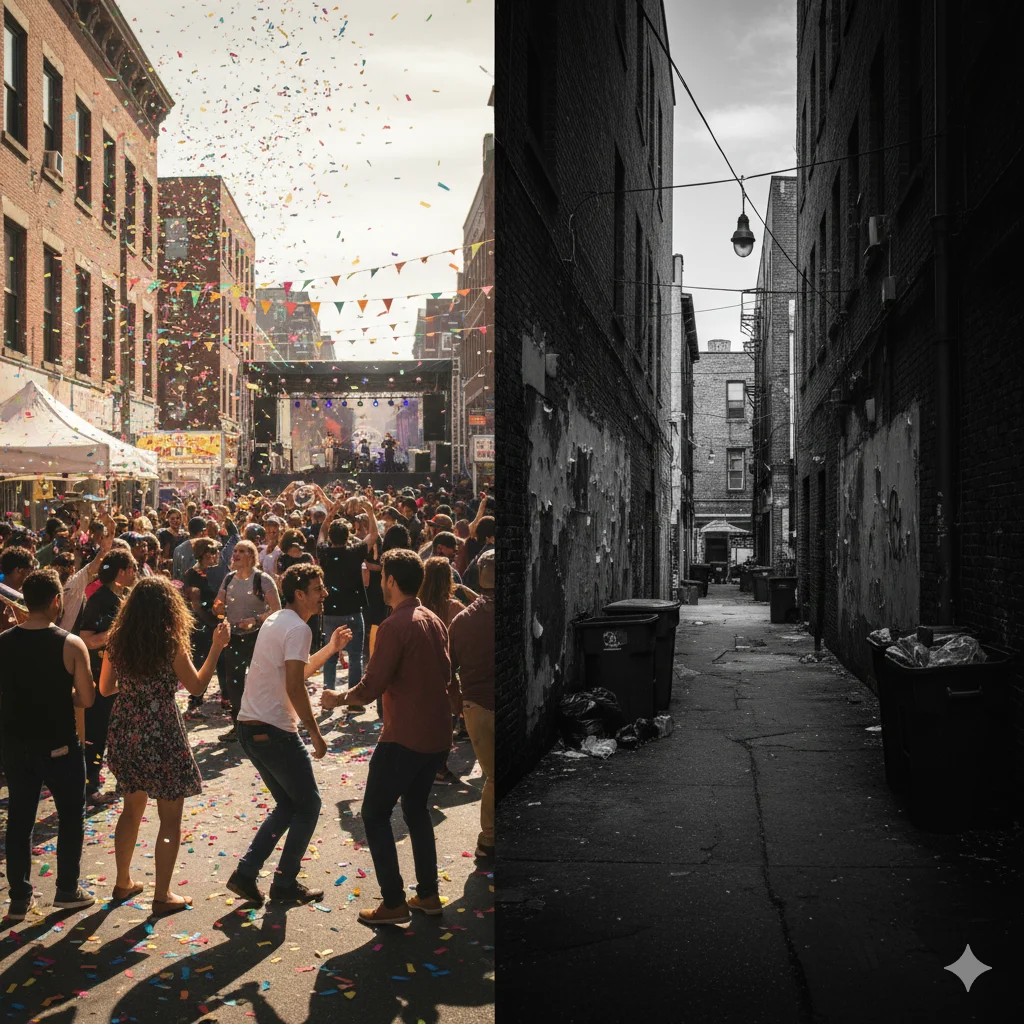
Juxtaposition is a literary and artistic technique where two or more different elements are placed side-by-side to highlight their contrasting qualities and create a deeper meaning or effect. It’s a powerful way to make a point without directly stating it.
🧠 What Does Juxtaposition Mean?
At its core, juxtaposition is all about contrast for effect. The word itself comes from Latin, with “juxta” meaning “near” and “position” meaning “place.” So, it literally means “placing near.” But it’s not just putting things together randomly; it’s a deliberate choice to place vastly different things—ideas, images, characters, colors, or words—right next to each other to emphasize their differences, create tension, evoke emotion, or reveal a deeper truth.
Think of it like this: a photo of a tiny, delicate flower growing straight out of a crack in a massive, rugged concrete wall. Alone, the flower is pretty, and the wall is just a wall. But placed together? The juxtaposition screams ideas about resilience, beauty in harsh places, and nature vs. man-made structures. The contrast does all the talking.
In short: Juxtaposition = Placing Contrasting Elements Side-by-Side = Creating Meaning Through Difference.
📚 The Deeper Meaning & Full Form of Juxtaposition
Unlike a slang acronym, “juxtaposition” doesn’t have a “full form” in the way “LOL” does. Its full meaning is its definition as a concept. It’s a noun describing the technique or act of juxtaposing. To “juxtapose” is the verb form—the action of placing those elements together.
The power of juxtaposition lies in its subtlety. Instead of saying, “This character is good, and that one is evil,” a writer might juxtapose a scene of one character helping a stray animal with a scene of the other character ignoring a person in need. The audience gets the message through the contrast, making it more impactful than a simple explanation.
🎨 Where Is Juxtaposition Commonly Used?
This isn’t just a stuffy, old-book concept. You encounter juxtaposition daily in all forms of media and communication. It’s the secret sauce that makes content engaging and thought-provoking.
- 🎬 In Movies & TV: Directors use visual juxtaposition all the time. A classic example is a happy wedding scene cut abruptly with a shot of a looming storm cloud or a funeral.
- 📸 Social Media (Instagram, TikTok): Creators use juxtaposition for powerful posts. Think of a “Then vs. Now” transformation reel, or a split-screen video contrasting a peaceful protest with a violent one to make a statement.
- 📖 Literature & Poetry: Writers juxtapose characters (think Harry Potter’s kindness vs. Draco Malfoy’s prejudice), settings, or themes to build conflict and depth.
- 🎭 Memes & Humor: Many memes rely on juxtaposition for their humor—placing a dignified classical painting next to a hilariously modern caption.
- 🎵 Music: Song lyrics often juxtapose emotions (“I’m so happy, I could cry”) or situations to convey complexity.
- 🖼️ Art & Photography: As with the flower and wall example, visual artists use juxtaposition to create striking, memorable images that tell a story.
It’s a formal concept used in creative, analytical, and casual contexts. You’d use the word “juxtaposition” in an essay or art critique, but you experience the effect of juxtaposition in everything from a Netflix series to a clever tweet.
💬 Examples of Juxtaposition in Action
Let’s look at how this plays out in stories, media, and even hypothetical chats.
1. In Classic Stories:
- Charles Dickens’ A Tale of Two Cities: The famous opening line, “It was the best of times, it was the worst of times…” directly juxtaposes opposites to set up the novel’s central conflict.
2. In Modern Film:
- In The Dark Knight, the Joker’s chaotic anarchy is constantly juxtaposed with Batman’s rigid sense of order, making their conflict ideological, not just physical.
3. In Social Media Imagery:
- A climate change post showing a vibrant, healthy coral reef next to a bleached, dead one. The side-by-side images are a powerful juxtaposition that argues the point more effectively than words alone.
4. In a Text Conversation:
A: “Just saw my ex at the fancy grocery store buying truffle oil. Literally thirty minutes later I saw him on a dating app profile that said ‘simple guy who loves cheap pizza and Netflix.'”
B: “LOL the juxtaposition is wild. Which one is the real him?!”
5. In a Personal Observation:
A: “My feed today is so weird. One friend is posting devastating news articles, and the very next story is someone’s avocado toast.”
B: “The brutal juxtaposition of modern life.”
✅ When to Use and When Not to Use Juxtaposition
✅ WHEN TO USE THE CONCEPT OF JUXTAPOSION:
- When you want to create a strong emotional impact or highlight a theme subtly.
- When writing an analytical essay about art, film, or literature.
- When creating engaging social media content that makes people think.
- When trying to explain a complex idea through a simple, contrasting example.
- In storytelling to develop characters or build tension.
❌ WHEN NOT TO USE THE WORD JUXTAPOSITION:
- In very casual, simple texts where it might sound overly academic (e.g., “Pass the salt, please.” doesn’t need it).
- In formal business or scientific reports where clarity is paramount, unless you are specifically analyzing a concept.
- When explaining something to a young child; simpler language is better.
📊 Juxtaposition in Different Contexts
| Context | Example Phrase/Use | Why It Works |
|---|---|---|
| Film Analysis | “The director uses juxtaposition of light and shadow to symbolize the character’s inner conflict.” | Precise, analytical, and expected in this context. |
| Everyday Observation | “The juxtaposition of that huge mansion right next to the tiny, run-down houses is jarring.” | Correctly labels a real-world contrast you’re noticing. |
| Creative Project | “For my photo series, I’m exploring the juxtaposition of nature and urban decay.” | Clearly communicates your artistic intent. |
| Simple Text Chat | “That’s such a crazy contrast!” | More natural and relatable in quick, casual conversation. |
🔄 Similar Concepts or Alternatives to Juxtaposition
While “juxtaposition” is specific, other related terms explore similar ideas of difference and comparison.
| Concept | Meaning | Key Difference |
|---|---|---|
| Contrast | The state of being strikingly different. | Broader term. Juxtaposition is the act of placing things to create a contrast. |
| Oxymoron | A figure of speech that juxtaposes contradictory terms (e.g., “deafening silence”). | A specific, compact form of juxtaposition using words. |
| Foiling | (In literature) Placing a character who contrasts with another to highlight particular qualities. | A specific type of character juxtaposition. |
| Paradox | A statement that seems self-contradictory but reveals a truth (e.g., “less is more”). | About the contradiction itself, not necessarily the physical placement. |
| Dichotomy | A division or contrast between two things that are opposed or entirely different. | Often refers to a larger, structural split rather than a placed pairing. |
🤔 Why is Juxtaposition Such a Powerful Tool?
Juxtaposition works because it engages the viewer’s or reader’s brain. It doesn’t hand you the meaning on a platter; it makes you connect the dots yourself. This active participation creates a stronger, more memorable impression and a deeper understanding. It’s the difference between being told something is unfair and seeing a stark, unfair contrast with your own eyes. The latter is far more persuasive and evocative.
🖼️ How to Create Effective Juxtaposition
Want to use it in your own posts, stories, or art? Here’s how:
- Identify Your Core Idea: What point do you want to make? (e.g., “Progress is slow.”)
- Find Two Opposing Elements: What two things can show that? (e.g., a photo of a tall modern skyscraper vs. the ancient, crumbling foundation stones nearby).
- Place Them Side-by-Side: Let the viewer do the work. The contrast between the new and the old will communicate the idea of building on the past, the speed of change, etc.
🎬 Famous Examples of Juxtaposition in Pop Culture
- The Godfather: The baptism scene cuts between the sacred church ceremony and the brutal murders of the Corleone family’s enemies. This juxtaposition highlights Michael Corleone’s corruption and hypocrisy.
- Any “Good vs. Evil” Story: Superman (alien, powerful, idealistic) vs. Lex Luthor (human, intellectual, cynical) is a constant character juxtaposition.
- Advertising: A car ad showing a vehicle in a serene, quiet mountain landscape (juxtaposed with the implied noise and stress of the city) sells an idea of escape.
📝 How to Spot Juxtaposition
Now that you know, you’ll see it everywhere. Ask yourself: “Are two different things being placed together to make me notice something about one or both of them?” If yes, that’s juxtaposition at work. It’s in the news, in political cartoons, in the architecture of your town, and in the lyrics of your favorite song.
❓ FAQs About Juxtaposition
Q: Is juxtaposition only for sad or serious things?
A: Not at all! While it’s great for drama, it’s also used for humor, irony, and creating interesting visuals. A meme juxtaposing a serious historical figure with a silly modern phrase is pure comedy.
Q: Can juxtaposition use similar things, or only opposites?
A: Typically, it uses different elements to highlight their differences. Placing two very similar things together is just comparison or patterning, not juxtaposition.
Q: What’s the difference between juxtaposition and irony?
A: Irony involves an outcome that is the opposite of what was expected. Juxtaposition is the tool that can create irony by placing expectation and reality side-by-side.
Q: Is it pronounced ‘jux-ta-poe-zish-un’?
A: Very close! The standard pronunciation is juhk-stuh-puh-ZIH-shun.
Conclusion:
So, what does juxtaposition mean? It’s the art of meaningful contrast. It’s the storyteller’s secret weapon, the meme-maker’s toolkit, and the reason why some images or scenes stick in your mind long after you’ve seen them. It’s not just a fancy word for English class; it’s a fundamental way we create and understand meaning by seeing how things relate—or violently disagree—with each other. Now that you’re in on the secret, you can not only spot it but use it to make your own points more powerfully, whether you’re writing a caption, making a video, or just explaining why your day felt so weirdly surreal.