
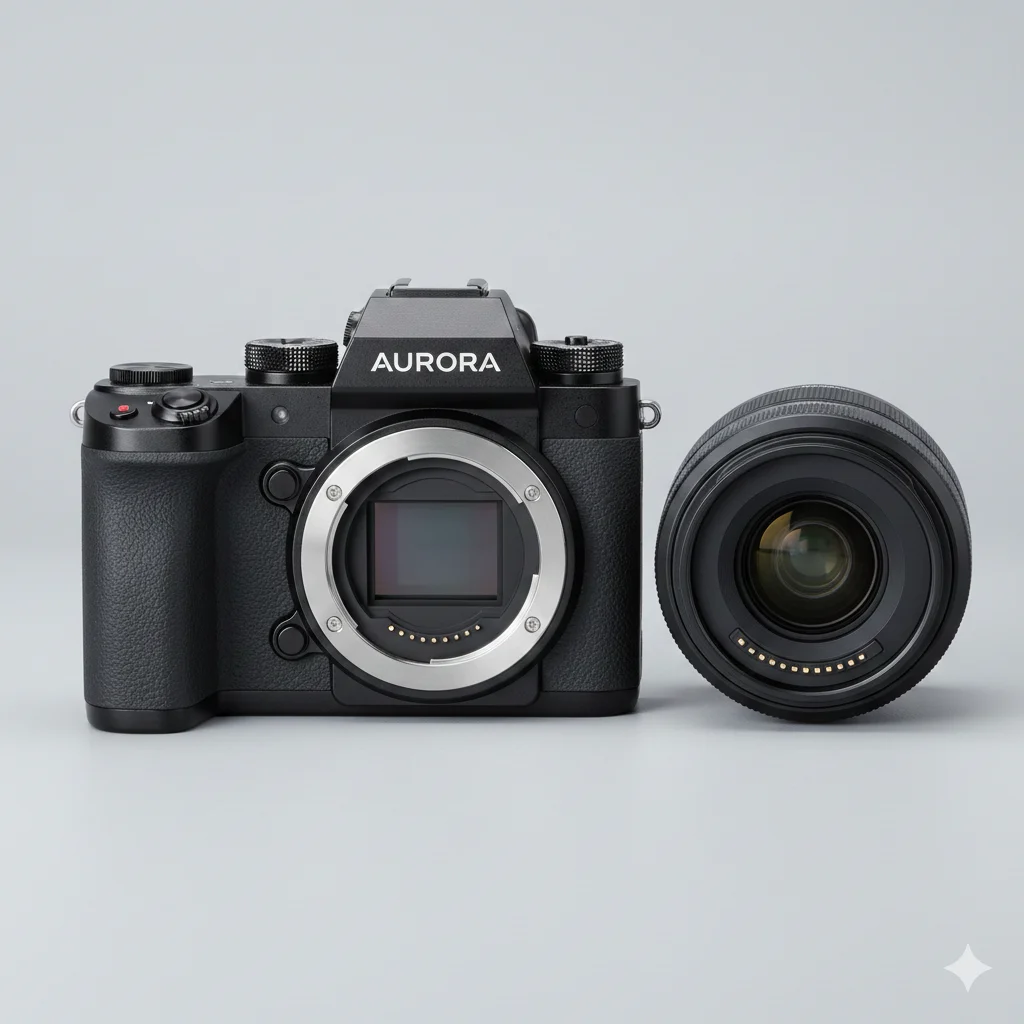
Remember the first time you heard a photographer friend excitedly talk about their new “mirrorless” camera? You nodded along, but secretly wondered—what makes it so special? Isn’t a camera just a camera? I was right there with you, clutching my trusty old DSLR and feeling a mix of confusion and FOMO. The photography world had moved on to a new buzzword, and I needed to catch up. If you’ve ever scrolled through gear reviews or seen sleek new cameras in stores and asked, “What does mirrorless camera actually mean?”—you’re in the perfect place. Let’s break down the tech jargon into plain, simple English.
A mirrorless camera is a digital camera that, unlike traditional DSLRs, does not have a reflex mirror inside. This allows it to be smaller, lighter, and use an electronic viewfinder to show you a live digital preview of your image before you take the shot.
🧠 What Does “Mirrorless Camera” Mean?
Let’s start with the name itself. The “mirrorless” part is a direct comparison to the king of cameras it aimed to replace: the DSLR (Digital Single-Lens Reflex). Inside a DSLR, there’s a clever system of mirrors. When you look through the viewfinder, a mirror reflects light from the lens up into your eye. When you press the shutter button, that mirror flips up out of the way to let light hit the sensor. It’s mechanical, it’s classic, and it makes that satisfying clunk sound.
A mirrorless camera removes that entire mirror box mechanism. Light from the lens passes directly onto the image sensor, all the time. That sensor then sends a live feed to a screen on the back and to a small electronic viewfinder (EVF). What you see through the viewfinder is a live video preview of your final image, complete with exposure, color, and depth-of-field effects applied.
In short: Mirrorless Camera = No Internal Mirror = Live Digital Preview + Compact Size.
📱 Where Are Mirrorless Cameras Commonly Used?
Mirrorless cameras are now the dominant choice across almost all photography and videography fields:
- 🌟 Professional Photography: Wedding, portrait, and commercial photographers love them for their reliability and quality.
- 🎬 Vlogging & Content Creation: Their compact size, flip-out screens, and superior video features (like 4K/60fps) make them ideal for YouTubers and creators.
- ✈️ Travel & Street Photography: The reduced weight and size are a huge advantage for photographers on the move.
- 📱 Everyday Enthusiasts: Many hobbyists upgrading from a smartphone appreciate the step-up in quality without the bulk of an old DSLR.
- 🎮 Live Streaming: High-end streamers use them as premium webcalls for exceptional video quality.
They are the standard for new camera buyers today, having largely replaced DSLRs in manufacturer lineups.
💬 Examples of Mirrorless Cameras in Conversation (Real Talk)
1. The Gear Recommendation:
A: “I’m looking to finally upgrade from my phone camera. Something good for travel pics?”
B: “100% go mirrorless. Something like a Sony a6xxx or Fujifilm X-T series. So much lighter than my old DSLR and the pics are stunning.”
2. The Tech Curiosity:
A: “Wow, your photos look so sharp! What are you shooting with?”
B: “Thanks! It’s a mirrorless Canon R6. The eye-autofocus is insane—it literally locks onto my subject’s eye.”
3. The Videographer’s Choice:
A: “We need a new camera for the YouTube channel. Should we get a cinema camera?”
B: “Nah, a pro mirrorless like the Panasonic S5 II will do everything we need in one small package.”
4. The Hobbyist’s Realization:
A: “I never use my big DSLR because it’s a pain to carry. 😩”
B: “Same. I switched to mirrorless and actually take it everywhere now. Game changer.”
5. The Store Conversation:
A: “I see this DSLR is cheaper than this similar-looking mirrorless model. Why?”
B: “The DSLR is older tech on clearance. The mirrorless has better video, faster focus, and is more future-proof.”
🕓 When to Choose and When to Skip a Mirrorless Camera
✅ WHEN A MIRRORLESS CAMERA IS A GREAT CHOICE:
- You value portability and weight.
- You shoot a lot of video.
- You want the most advanced autofocus (eye-tracking, etc.).
- You prefer seeing a live preview of your exposure and colors.
- You’re buying a new camera system and want the latest lenses.
❌ WHEN YOU MIGHT RECONSIDER:
- You have a massive collection of DSLR lenses and don’t want to adapt or replace them.
- You need extreme battery life for long shoots (DSLR optical viewfinders use less power).
- You strongly prefer the optical, through-the-lens view of a DSLR over an electronic screen.
- You’re on an extremely tight budget and need the best value (used DSLRs can be bargains).
Mirrorless vs. DSLR: Quick Context Guide
| Context | Example Phrase (Mindset) | Why It Works / Doesn’t |
|---|---|---|
| Travel Photography | “I’m packing my mirrorless and 3 lenses.” | Lightweight kit makes carrying gear all day feasible. |
| Professional Sports | “The mirrorless tracking kept the athlete’s eye in focus.” | Superior autofocus speed and accuracy for fast action. |
| Beginner Learning | “What I see in the viewfinder is what my photo will look like!” | Live preview helps understand settings like exposure instantly. |
| Legacy User | “I’ll use my DSLR until it dies; my lenses are perfect.” | Cost-effective to stay with a familiar, paid-off system. |
| Formal Studio Work | “We use the high-resolution mirrorless for detail.” | Excellent image quality meets professional demands. |
🔄 Similar Camera Types & Alternatives
Here’s how mirrorless fits into the broader camera landscape:
| Camera Type | Key Meaning / Difference | Best For… |
|---|---|---|
| DSLR Camera | Uses a mirror and optical viewfinder. Larger body. | Traditionalists, those with existing lens collections, budget buyers. |
| Point-and-Shoot | Fixed lens, very compact. Automatic everything. | Ultimate pocket portability, simplicity over manual control. |
| Smartphone Camera | Computational photography-focused. Always with you. | Everyday snapshots, social media, using apps for editing/sharing. |
| Film Camera | Uses photographic film, not a digital sensor. | Analog aesthetic, deliberate shooting process, nostalgia. |
| Medium Format | Has a sensor significantly larger than full-frame. | Maximum detail and dynamic range for high-end commercial work. |
🎯 The Core Advantages of Going Mirrorless
Why did the industry shift? Here are the key benefits:
- Size & Weight: Less internal machinery means smaller bodies and lenses.
- Autofocus Performance: On-sensor focus points enable faster, more accurate tracking, especially for faces and eyes.
- Video Capability: Designed for digital capture, they excel at high-resolution video with features like focus tracking.
- What You See Is What You Get (WYSIWYG): The electronic viewfinder shows exposure, white balance, and filter effects in real time.
- Innovation: As the new standard, all R&D from major brands (Canon, Nikon, Sony, Fujifilm) is focused here.
🤔 The Potential Drawbacks to Consider
It’s not all perfect. Keep in mind:
- Battery Life: Using an electronic viewfinder/screen constantly drains batteries faster than a DSLR’s optical finder.
- Electronic Viewfinder Lag: In very low light, some EVFs can get grainy or lag slightly (though this is rare in modern models).
- Cost: New mirrorless bodies and their new lens mounts can be a significant investment.
🔮 The Future of Mirrorless Cameras
The technology is still evolving rapidly. We’re seeing incredible advancements in computational photography (like smartphone tech trickling up), in-body stabilization that lets you handhold slow shots, and global shutters that eliminate rolling distortion. Mirrorless is the platform where this future is being built.
🛒 How to Choose Your First Mirrorless Camera
Consider these steps:
- Set a Budget: Include at least one good lens.
- Choose a Sensor Size: APS-C (crop sensor) for balance of size and cost; Full-Frame for ultimate image quality and low-light performance.
- Pick an Ecosystem: Each brand (Sony E-mount, Canon RF, Nikon Z, Fujifilm X) has its own lens lineup. Your camera choice locks you into that system.
- Handle Them: Go to a store. The feel in your hands and menu layout are crucial.
❓ FAQs About Mirrorless Cameras
Are mirrorless cameras better than DSLRs?
For most new buyers, yes. They offer newer technology, better video, and more compact designs. “Better” depends on your specific needs, but they are the current industry leading choice.
Can I use my old DSLR lenses on a mirrorless camera?
Yes, usually via an adapter. Brands like Canon, Nikon, and Sony make official adapters that often retain autofocus and stabilization, but performance can vary.
Do professionals use mirrorless cameras?
Absolutely. Mirrorless cameras are now the standard tool for the vast majority of professional photographers and videographers across all genres.
What does “full-frame mirrorless” mean?
It refers to a mirrorless camera with a full-frame sensor (36x24mm, the size of 35mm film). This is a larger, more expensive sensor type known for exceptional image quality and low-light performance, compared to smaller APS-C or Micro Four Thirds sensors.
Is a mirrorless camera good for beginners?
Yes, and often ideal. Features like the live preview in the viewfinder help beginners learn photography faster by showing the direct result of changing settings like shutter speed or aperture.
✨ Conclusion
So, what does mirrorless camera mean? At its heart, it means evolution. It represents the shift from mechanical, optical systems to sleek, electronic, and intelligent ones. For anyone stepping up from a smartphone, a travel photographer craving a lighter bag, or a creator demanding top-tier video, a mirrorless camera is almost certainly the right and future-proof choice. While DSLRs are still capable tools, the energy, innovation, and undeniable advantages now lie squarely in the mirrorless realm. Your journey into next-level photography likely starts by looking into that electronic viewfinder.