🤔
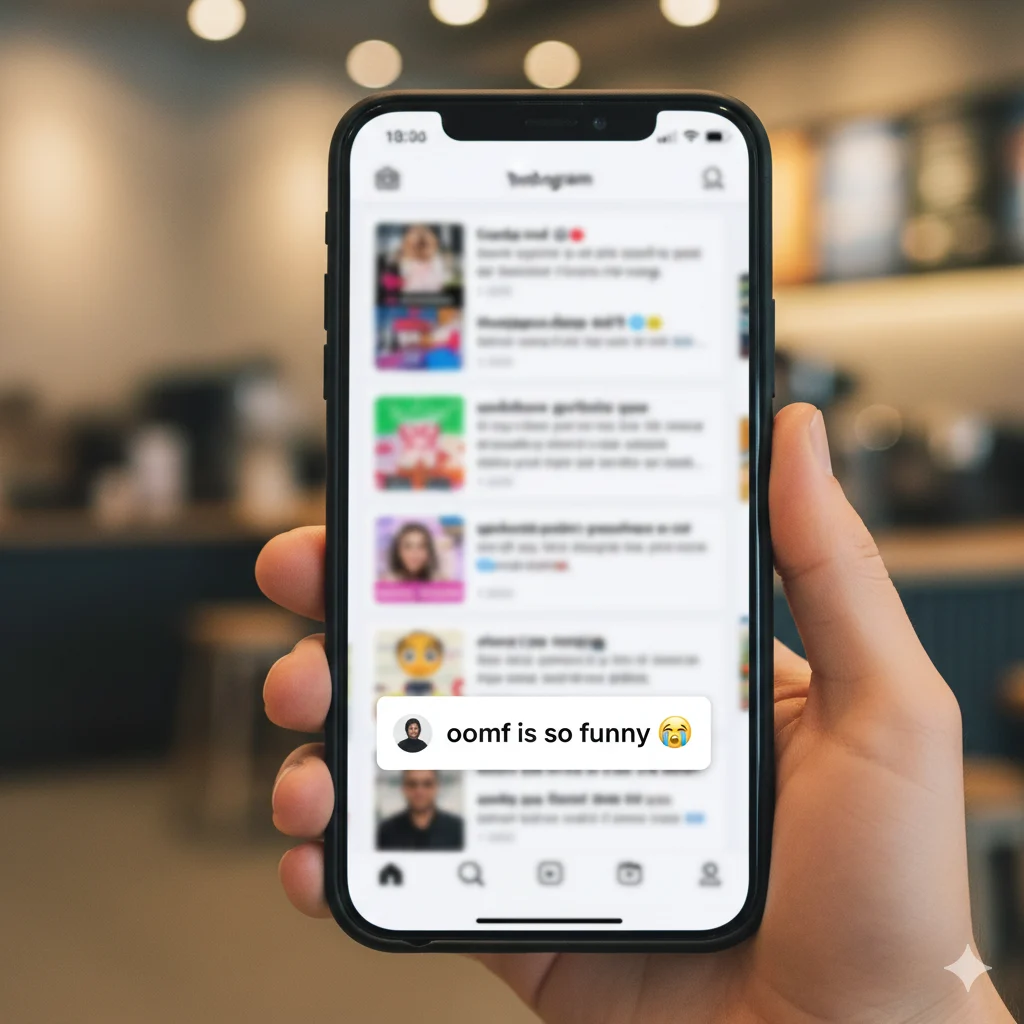
I was scrolling through my Twitter feed the other day, deep in the digital drama, when I saw it: “oomf just posted the most unhinged selfie and I’m living for it.” I stopped. My thumb hovered over the screen. Oomf? Was it a typo? A new acronym I’d missed? I felt a sudden, sharp awareness of my online age. If you’ve ever had that same moment of confusion, you’ve come to the right place. Welcome to the club—let’s decode this internet mystery together.
Oomf means “One Of My Followers.” It’s a casual, often playful or secretive way to talk about someone from your social media circle without directly naming them.
🧠 What Does Oomf Mean in Text?
Let’s get straight to the point. Oomf is an acronym that stands for “One Of My Followers.” It’s a piece of internet shorthand that exploded in popularity on platforms like Twitter (now X) and Tumblr, used to refer to a specific person who follows you on social media without actually tagging them or revealing their identity.
Think of it as a digital pointing finger. When you say “oomf,” you’re subtly directing your audience’s attention to someone in your follower list, creating a sense of shared, insider knowledge among your mutuals. It can be used affectionately, neutrally, or even passive-aggressively.
In short: oomf = One Of My Followers = A vague, anonymous way to refer to someone you follow back on social media.
📱 Where Is Oomf Commonly Used?
This slang is a true child of the social media era. You’ll rarely, if ever, hear it spoken aloud in a serious conversation. Its natural habitats are:
- Twitter (X) 🐦: The undisputed king of
oomfusage. It’s perfect for subtweeting (tweeting about someone without using their handle) and commenting on public threads. - Tumblr 💬: The platform where
oomfgained significant traction among fandom cultures for discussing mutuals and their posts. - Instagram 📸: Commonly found in comments and Stories, especially when reposting or reacting to a follower’s content indirectly.
- TikTok 🎵: Used in video captions and comments to talk about a follower’s video or opinion without a direct @mention.
- Discord & Gaming Chats 🎮: Sometimes used in community servers to refer to another member of the server.
Tone & Formality: Oomf is extremely casual and firmly rooted in internet culture. It is not formal, and you should never use it in professional emails, academic papers, or any serious communication.
💬 Examples of Oomf in Conversation
The best way to understand oomf is to see it in action. Here are some realistic examples from different platforms.
Example 1: The Appreciative Post
A: oomf always finds the best memes. my timeline is blessed because of them. 🙏
B: right?? i look forward to their posts every day.
Example 2: The Vague Observation
A: oomf is having a rough day and i just want to give them a hug. 😔
B: hope they’re okay! sending good vibes.
Example 3: The Fangirl Moment
A: OOMF JUST MET THEIR FAVORITE BAND I’M SO JEALOUS 😭
B: NO WAY! THE LUCK IS IMMACULATE.
Example 4: The Playful Roast
A: oomf really just said that… the audacity is staggering.
B: pffft, they’re a mess. we love to see it.
Example 5: The Mutual Connection
A: i see oomf and i have a mutual friend. small world!
B: the internet is a tiny, tiny place.
Example 6: The Relatable Content
A: oomf’s spotify wrapped is scarily similar to mine. are we the same person?
B: you have impeccable taste, confirmed.
Example 7: The Cryptic Tweet
A: oomf knows what they did.
B: 👀 the tea is hot today.
🕓 When to Use and When Not to Use Oomf
Navigating the use of oomf is all about understanding context. Here’s your quick guide.
✅ When to Use Oomf
- On Casual Social Media: When tweeting, posting on Tumblr, or commenting on Instagram Stories.
- For Positive or Neutral Comments: To shout out a follower’s great post or make a harmless observation.
- When You Want to Be Vague: To discuss something without starting public drama or directly tagging the person.
- Within Your Circle of Mutuals: When your audience is likely other followers who understand the context and the lingo.
❌ When Not to Use Oomf
- In Professional Communication: Never in work emails, Slack messages, or formal reports.
- During Serious or Sensitive Conversations: If you need to address a serious issue, be direct and talk to the person, don’t subtweet them.
- To Be Deliberately Mean or Bully: Using
oomffor passive-aggressive attacks is a classic form of online drama and is never okay. - In Verbal Conversation: It will almost certainly confuse people and sound very out of touch.
Contextual Usage Table
| Context | Example Phrase | Why It Works |
|---|---|---|
| Twitter Comment | “oomf’s new playlist is a total vibe 🎧” | Casual, complimentary, and fits the platform’s culture perfectly. |
| Direct Message | “Hey, I saw your post about the concert!” | Personal, direct, and avoids unnecessary vagueness in a 1-on-1 chat. |
| Professional Email | “Please review the report from the marketing team.” | Formal, clear, and leaves no room for misinterpretation. |
🔄 Similar Slang Words or Alternatives
Oomf exists in a whole ecosystem of social media slang used to refer to people. Here’s a quick cheat sheet.
| Slang | Meaning | When to Use |
|---|---|---|
| Mutuals | People you follow and who follow you back. | Talking about your close-knit online circle. “My mutuals are the funniest.” |
| Icks | A slang for “ick,” meaning a turn-off. | To casually express dislike for something. “That gave me the ick.” |
| Frl | Short for “for real.” | To emphasize that you’re being serious. “You’re frl the best.” |
| Fwiw | Acronym for “for what it’s worth.” | To softly offer an opinion. “Fwiw, I think you’re right.” |
| Tbh | Acronym for “to be honest.” | To preface an honest opinion or thought. |
| Lowkey | To a small extent; secretly. | When you feel something but not intensely. “I’m lowkey excited for the weekend.” |
💭 The Secret Vibe of Oomf: More Than Just an Acronym
Using oomf isn’t just about saving characters; it’s about sending a specific social signal. It creates a sense of in-group belonging. When you use it, you’re speaking to the part of your audience that “gets it.” It can feel like a secret handshake, a way of saying, “We’re all part of the same online community.” This shared understanding is a powerful social glue in digital spaces.
🚩 Is Using Oomf Considered Rude?
This is a nuanced question. Oomf itself is not inherently rude, but its intent is entirely determined by the content of the tweet or post it accompanies. A positive post like “oomf is so talented” is clearly a compliment. However, oomf is frequently the star of subtweeting, which is the act of posting about someone without naming them, often in a negative or critical way. In this context, it can be seen as passive-aggressive, immature, and yes, very rude. It creates drama and forces others to guess who you’re talking about.
🗣️ How to Pronounce Oomf
While you’ll almost never need to say this out loud, it’s typically pronounced as a single syllable: “oomf” (rhyming with “roomph”). It sounds exactly like it looks—a quick, blunt sound.
📈 The Rise of Oomf and Internet Linguistics
The emergence of words like oomf is a fascinating part of internet linguistics. It highlights how digital communication fosters the creation of highly specific jargon to meet new social needs. The need to talk about our vast networks of followers without talking to them directly created a lexical gap, and oomf neatly filled it. It’s a testament to the creativity and efficiency of online communities.
🤔 Why Do People Use Oomf Instead of Tagging?
There are several psychological and social reasons for this:
- Avoiding Notification Drama: Tagging someone pulls them directly into the conversation. Using
oomflets you comment without necessarily notifying the subject, giving you more control over the conversation. - Maintaining Plausible Deniability: If the person being referred to as
oomfgets upset, the poster can always claim they were talking about someone else. - Creating Intrigue: Vagueness can be engaging. It makes other followers curious and can drive more interaction as people try to figure out who you’re talking about.
🧐 Oomf vs. Other Vaguebooking Terms
“Vaguebooking” is the older sibling of subtweeting—posting vague status updates on Facebook to elicit concern or questions. Oomf is a more specific tool than general Vaguebooking. While a Vaguebook post might be “Ugh. Some people are so annoying,” a post using oomf narrows it down to “Oomf is being so annoying today.” It’s vague, but contextually specific to your follower list.
❓ FAQs About Oomf
What does oomf stand for?
It stands for “One Of My Followers.”
Can oomf be used in a flirty way?
Absolutely. A tweet like “oomf is looking cute today 😉” is a classic, low-key way to express attraction without the pressure of a direct message.
Is oomf still popular in 2024?
Yes, it remains a widely recognized and used term on social media platforms, especially Twitter and TikTok.
What is the opposite of oomf?
There isn’t a direct acronymic opposite. You would just say “a non-follower” or someone “I don’t follow.”
Can oomf refer to more than one person?
Technically, it’s singular (“One Of My Followers”). However, in casual use, you might see it stretched to refer to a small group, like “some of my oomfs,” though “mutuals” is more common for a group.
What does ‘oomfs’ mean?
This is simply the plural form, meaning “ones of my followers.” It’s used to refer to several people in your follower list at once.
✅ Conclusion
So, the next time you see oomf pop up on your timeline, you won’t be left in the dark. You’ll know it’s a secret handshake, a digital nod toward “One Of My Followers.” It’s a versatile little acronym that powers everything from heartfelt compliments to the peak of online passive aggression. Now that you’re in on the secret, you can scroll with confidence—or even use it yourself to join the conversation. Just remember the golden rule: with great vagueness comes great responsibility. Use your oomf powers for good

Mariah Cannon is an accomplished author and content creator, passionate about storytelling and delivering impactful messages. Through her writing, she explores themes of personal development, creativity, and the power of perspective. Her work is designed to motivate, inspire, and provide readers with practical insights for navigating life’s challenges while embracing growth and self-expression.