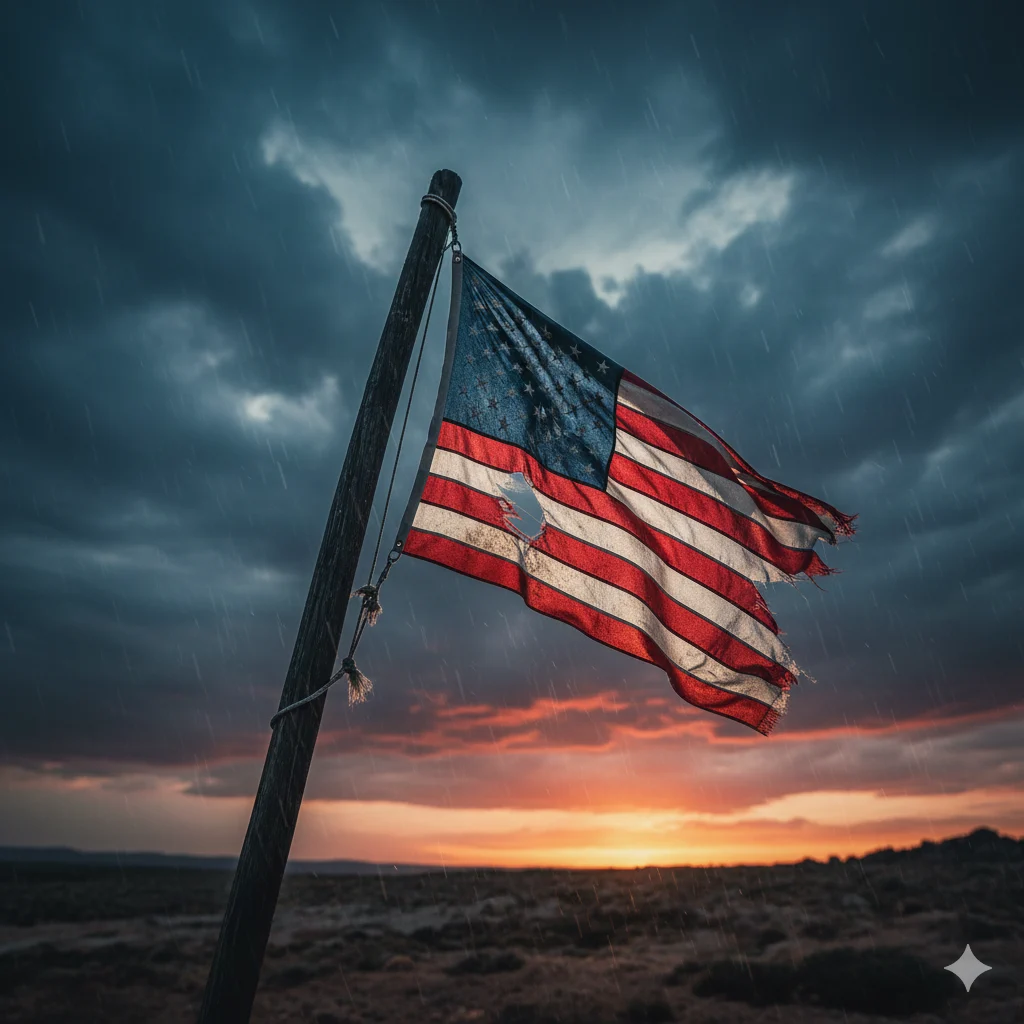
You’re scrolling through your feed and you see it—a photo, a news clip, maybe a neighbor’s porch. The American flag, but something’s off. It’s upside down. Your mind races. Is it a mistake? A sign of disrespect? Or a powerful message you’re not quite understanding? That moment of confusion is exactly why we’re here. Let’s unravel the meaning behind this striking and often misunderstood symbol.
: An upside-down American flag is a recognized distress signal. It means the person or group flying it believes the nation is in grave danger or extreme crisis, whether from political turmoil, societal injustice, or a dire emergency. It’s a provocative, legal form of political protest.
What Does an Upside Down American Flag Mean?
Flying the American flag upside down is not a random act of vandalism or simple disrespect. It is a deliberate use of the U.S. Flag Code, which explicitly states: “The flag should never be displayed with the union down, except as a signal of dire distress in instances of extreme danger to life or property.”
In essence, it transforms the flag from a symbol of national pride into a national SOS. The “union” (the blue field with stars) should be at the top left when displayed. Reversing this is a coded, symbolic cry for help, indicating that the flyer believes the country itself is in a state of emergency.
In short: Upside Down Flag = Signal of Dire Distress = “Our Nation is in Crisis.”
Where Is an Upside Down Flag Commonly Seen?
This symbol appears in various real-world and digital contexts, moving beyond its traditional use:
- Political Protests & Rallies: 🗣️ Carried at demonstrations across the political spectrum to signal a belief that constitutional principles are under threat.
- Residential Display: 🏠 Flown on private property by individuals making a sustained personal statement about national affairs.
- Social Media & Profile Pictures: 📱 Used digitally as a potent profile banner or in posts to amplify a message of political distress.
- News Media & Documentary Imagery: 📺 Featured in news coverage to visually represent periods of deep national division or controversy.
- Historical & Artistic Context: 🎨 Referenced in art, film, and literature to evoke themes of rebellion, crisis, or societal warning.
It is not casual or social-media-friendly in the way slang is. Its use is highly formal, serious, and intentionally provocative.
The Historical Roots: From Naval SOS to Political Protest
The flag code’s distress provision has practical origins. For centuries, ships at sea would fly their ensigns upside down to signal they were in grave trouble and required immediate assistance. This was an internationally understood maritime cry for help.
This tradition was codified into American flag etiquette. Its adaptation for political protest is a modern interpretation. Protesters use it symbolically to argue that the “ship of state” is foundering—that the nation’s core ideals, safety, or integrity are in peril. This usage surged during events like the Vietnam War, the 2000 election recount, the January 6th Capitol events, and subsequent political tensions.
Legal Status: Is It Illegal to Fly the Flag Upside Down?
This is a critical question. No, it is not illegal. The U.S. Flag Code is a set of guidelines for etiquette and respect; it does not carry penalties for violation, thanks to the First Amendment’s protection of free speech.
Supreme Court rulings (like Texas v. Johnson, which protected flag burning as speech) have consistently held that symbolic speech using the flag is protected. Therefore, flying it upside down as a political statement is a legally protected form of expression, however controversial it may be.
Examples of Context and Interpretation
Understanding this symbol requires context. Here’s how its meaning is interpreted in different situations:
- At a Political Rally:
- Sign: “Save Our Democracy” with an upside-down flag image.
- Interpretation: The protestors believe democratic institutions are under such threat that the nation is in constitutional distress.
- On a Residential Lawn:
- Scenario: A homeowner flies the flag upside down for weeks following a major Supreme Court decision or election.
- Interpretation: The individual is making a personal, persistent statement that they view the country’s direction as dangerously off-course.
- In a Social Media Post:
- Post: An upside-down flag graphic with the caption, “This is not the America I swore to defend. #Distress.”
- Interpretation: A veteran or citizen is using the symbol to express profound disillusionment and a call for national correction.
When to Understand and When to Misinterpret
✅ When to Understand Its Use as Protected Speech:
- During periods of perceived national political or constitutional crisis.
- As a form of non-violent, symbolic political protest.
- When used consistently with a message about national “distress” or “danger.”
- In artistic or journalistic contexts commenting on national strife.
❌ When It Might Be a Mistake or Different Signal:
- Accidental Display: Often seen on uniforms or patches where orientation can be confused. (Rule: The union should face forward, as if the flag is blowing in the breeze as the person moves ahead).
- Ignorance of Flag Code: Someone may simply not know the proper orientation.
- In some other national contexts, an inverted flag can signify military surrender, but this is not its primary meaning in the modern American protest context.
Public Reaction and Controversy
The upside-down flag is intensely controversial because it repurposes the ultimate symbol of national unity as a symbol of national fracture. Reactions are deeply polarized:
- Supporters view it as a patriotic duty—a way to use the flag’s own code to sound an alarm and save the nation’s ideals.
- Opponents view it as deeply unpatriotic, disrespectful to the country and its service members, and an offensive gesture that undermines national unity.
This very tension is what makes the symbol so powerful and attention-grabbing.
Similar Symbols of Protest or Distress
| Symbol | Meaning | Key Context |
|---|---|---|
| Flag at Half-Staff | Mourning, respect for the deceased. | Death of officials, memorial days, tragedies. |
| Burning the Flag | Extreme protest, rejection of the state. | Supreme Court-protected speech; viewed as highly offensive. |
| Black & White “Thin Blue Line” Flag | Support for law enforcement. | Can be controversial; seen by some as opposition to racial justice movements. |
| Rainbow Flag | LGBTQ+ pride and rights. | Symbol of celebration and advocacy for equality. |
| “Don’t Tread on Me” Gadsden Flag | Libertarian values, individualism, defense. | Originally a Revolutionary War symbol; now used by various groups. |
The Fine Line Between Protest and Disrespect
This is the core debate. The flag code itself treats the inverted display as an exception for distress, not blanket disrespect. Protesters argue they are following the code’s literal provision to show the highest form of concern. Critics argue that outside of literal, physical distress, its use is a deliberate dishonor. The law sides with the protester’s right to this symbolic speech, but the court of public opinion remains fiercely divided.
Modern Usage and Digital Age Amplification
In the digital era, the symbol spreads faster and gains wider recognition. A single image of an upside-down flag at a protest or on a Supreme Court Justice’s lawn can become a viral meme, galvanizing supporters and enraging opponents. This amplifies its power as a political semaphore, instantly communicating a stance of alarm and opposition to a national audience.
FAQs About the Upside Down American Flag
Q: Is it against the law to fly the American flag upside down?
A: No. It is protected under the First Amendment as symbolic political speech.
Q: What is the official reason you can fly a flag upside down?
A: According to the U.S. Flag Code, it is to be used as “a signal of dire distress in instances of extreme danger to life or property.”
Q: Do military personnel ever use the upside-down flag?
A: In protest contexts, sometimes veterans or active-duty personnel use it to express their belief that the nation they serve is imperiled. On uniforms, an inverted patch is standard—the union faces forward to simulate a flag flying in the breeze as the person moves ahead.
Q: How is it different from burning the flag?
A: Both are protected symbolic speech. Inversion is seen as a “distress signal” within the flag’s own code, while burning is seen as a more total rejection. Both are equally controversial but legal.
Q: Has the upside-down flag been used historically?
A: Yes, its use as political protest has notable precedents during the Vietnam War era, the 2000 election controversy, and has become more frequent in recent polarized climates.
Conclusion
The upside-down American flag is far more than a simple prank or act of disrespect. It is a loaded, historical, and legally protected symbol used to sound the loudest alarm a citizen can symbolically make—that they believe their country is in a state of emergency. Whether you see it as a patriotic warning or a profound insult depends entirely on your perspective, but its meaning is clear: the person flying it believes America is on the wrong course and is in dire distress. Understanding this context is key to navigating the complex emotional and political landscapes where this powerful symbol appears.

Anderson Smith is a dedicated author and content creator, known for his insightful reflections and thought-provoking articles on Quotologi. With a keen interest in motivation, personal growth, and the art of meaningful expression, Anderson strives to empower readers through the written word. His work combines practical advice with inspirational narratives, helping audiences navigate life’s challenges while discovering the power of perspective and self-improvement.