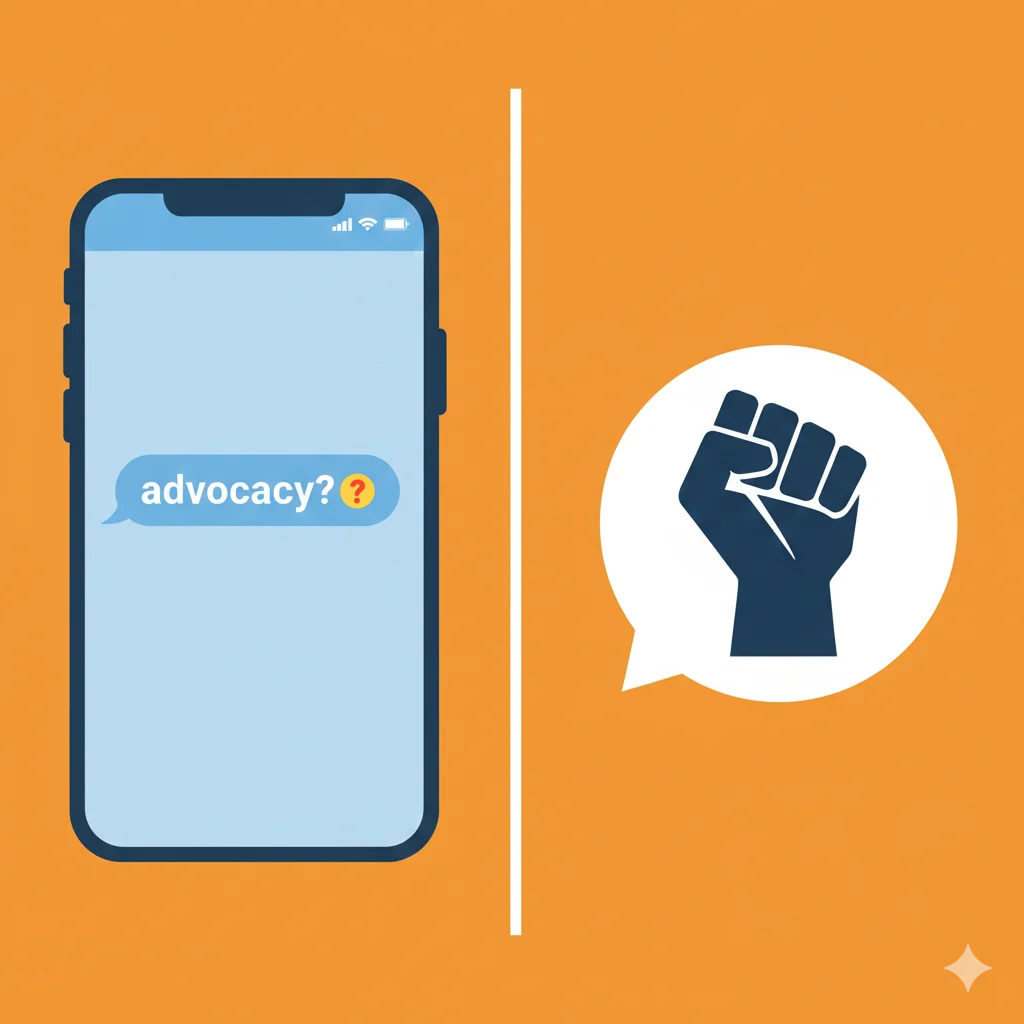
Have you ever been scrolling through your feed and seen a post tagged #MentalHealthAdvocacy, or watched a friend’s passionate Story about a cause with “Time to be an advocate!” in the caption? Maybe you’ve seen it pop up in a serious group chat, shifting the tone from casual banter to something more purposeful. If your first thought was, “Wait, isn’t that just for lawyers and politicians?”—you’re not alone. I remember seeing “She’s such a great advocate” under a post about a local community cleanup and feeling a flicker of confusion. It seemed so… official for Instagram. But that’s the thing—the word “advocacy” has packed its bags from the dusty halls of formal institutions and moved right into our digital DMs and social media bios. It’s no longer just a term; it’s an identity, a call to action, and a core part of modern online culture. Let’s break down what it really means when you see it in your texts and timelines.
: In modern texting and online slang, “advocacy” means actively speaking up, supporting, and fighting for a cause, idea, or person you believe in. It’s a powerful, purposeful way of saying you’re not just a passive supporter—you’re using your voice and platform to create change. It’s seen as positive, passionate, and socially conscious.
What Does Advocacy Mean?
Let’s cut through the formal dictionary stuff. In the world of texts, DMs, and social media, “advocacy” is about public support and action. It’s the move from quietly agreeing with something to actively championing it.
Think of it like this: Liking a post about climate change is support. Sharing that post with your own call to vote for greener policies? That’s advocacy. Being sad about injustice is a feeling. Creating a thread to educate your followers on how to help? That’s advocacy.
It’s the difference between being a fan in the stands and being a player on the field. The word carries a sense of responsibility, courage, and using your voice (or your platform) for something bigger than yourself.
Example in a sentence: “Her advocacy for accessible design on her tech blog really changed the conversation in our community.”
In short: Advocacy = Public Support + Action = Using your voice/platform to fight for a cause.
Where Is Advocacy Commonly Used? 📱
This term thrives in digital spaces where ideas are shared and movements are born. It’s less common in frivolous chats and more prevalent in purposeful communication.
- Instagram & TikTok: The capital of modern advocacy. Think informative carousels, impactful Reels, and Stories dedicated to social, environmental, or political causes. Hashtags like #SelfAdvocacy, #HealthAdvocacy, and #CommunityAdvocacy are huge here.
- Twitter (X): Used in heated threads, calls to action, and profile bios (e.g., “Disability Rights Advocate”).
- Facebook Groups: Central to community organizing. You’ll see it in group descriptions and event posts for local causes.
- Professional & Activist WhatsApp/Telegram Groups: Used to coordinate efforts, share resources, and plan campaigns.
- LinkedIn: Common in profiles and posts related to corporate social responsibility, DEI (Diversity, Equity, and Inclusion), and professional causes.
- Formality Level: It can be both formal and casual. In a bio, it’s a serious identity marker. In a chat, it can be used earnestly (“I admire your advocacy!”) or even with mild sarcasm (“Okay, put your advocacy hat on, we need to convince the group chat”).
Examples of Advocacy in Conversation 💬
Here’s how “advocacy” and “advocate” play out in real digital chats.
- In a Group Chat Planning an Event:
A: guys, the venue isn’t wheelchair accessible. we need to find a new one.
B: thank you for pointing that out. seriously, thanks for the advocacy. - Supporting a Friend:
A: i finally emailed my professor about getting those lecture notes in advance.
B: YES! so proud of you for the self-advocacy. that’s huge. 👏 - Discussing Social Media:
A: did you see Maya’s new series on sustainable fashion?
B: yeah, her advocacy is always so well-researched and not just performative. - In a Professional Network Setting:
A: Our company should really have a mental health day.
B: I agree. If you write up a proposal, I’ll back you up. Let’s do some internal advocacy. - Casual & Slightly Sarcastic:
A: my mom keeps sending me weird conspiracy articles.
B: time for some intense family chat advocacy. good luck soldier. 🫡
When to Use and When Not to Use Advocacy
✅ When to Use:
- When praising someone for publicly supporting a cause.
- When describing your own or someone’s purposeful actions online or offline.
- In bios to state your values clearly.
- In discussions about social justice, health, rights, or community work.
- To encourage someone to speak up for themselves or others.
❌ When Not to Use:
- To describe simple, passive agreement (use “support” instead).
- In very casual, lighthearted chats about trivial topics (it will sound oddly intense).
- In situations requiring immediate, urgent action (e.g., “We need advocacy!” during a crisis is vague; “Call 911!” is direct).
- If you don’t understand the cause deeply—using it flippantly can come off as insincere.
| Context | Example Phrase | Why It Works |
|---|---|---|
| Social Media Bio | “Digital artist & mental health advocate.” | Clearly states values and purpose. |
| Encouraging a Friend | “Your advocacy in that meeting made a real difference.” | Acknowledges active, brave effort. |
| Work/Professional Email | “This project aligns with our department’s advocacy for transparency.” | Formal, values-driven language. |
| Casual Peer Recognition | “Not all heroes wear capes, some do advocacy on TikTok. Respect.” | Modern, relatable, and praising. |
Similar Slang Words or Alternatives
| Slang / Term | Meaning | When to Use |
|---|---|---|
| Activism | Action for political or social change. Often more protest-oriented. | For direct action, marches, petitions, organized campaigns. |
| Allyship | Actively supporting marginalized groups you’re not a part of. | Specifically for supporting others’ struggles from a position of privilege. |
| Championing | Vigorously supporting or fighting for. | Slightly more old-school, but means the same. Great in professional settings. |
| Speaking Up | The core action of advocacy. | The simpler, more casual version. Less formal than “advocacy.” |
| Raising Awareness | Making people know about an issue. | The first step before advocacy. Advocacy includes this plus pushing for change. |
| Support | Backing or agreeing with. | Broader and more passive. Use this when no direct action is involved. |
The Different Shades of Advocacy Online
The term has evolved into specific branches online. Self-Advocacy is huge—it means speaking up for your own needs, whether in healthcare, school, or work. Digital Advocacy refers specifically to using online tools (social media, blogs, petitions) to drive change. Peer Advocacy is about supporting people in your own community or group. Recognizing these shades helps you understand the specific flavor of “advocacy” someone is referencing.
Why Advocacy Became a Digital Slang Powerhouse
Its rise is no accident. Social media turned everyone into a potential broadcaster. Having a “platform,” even with 50 followers, comes with an unspoken question: What will you use it for? “Advocacy” fills that space perfectly. It’s a one-word manifesto. It signals you’re informed, you care, and you’re engaged in the world. It’s the antithesis of apathy, which is a key social currency online today.
The Fine Line: Advocacy vs. Performance
This is the critical modern discussion. Authentic advocacy is backed by action, learning, and listening. Performative advocacy (sometimes mocked as “slacktivism”) is superficial support for social clout—like posting a black square without follow-through. When you use the term, or call someone an “advocate,” it implies you believe their efforts are genuine. Using it carelessly can damage your credibility.
How to Respond to Someone’s Advocacy
If someone shares their advocacy work with you, a “like” is fine, but engagement is better. Try: “This is important, thanks for sharing.” “I learned something new from your post.” “How can I support this cause?” Avoid dismissive or “all lives matter”-style derailments, which shut down conversation.
The Tone of Advocacy: Is It Flirty, Friendly, or Formal?
It is almost never flirty. Its core is serious and purposeful. It can be friendly when used among peers (“Love your advocacy!”). It is often formal when used in professional or academic contexts. The tone is entirely dependent on the cause and the relationship between the people talking.
Advocacy in Gaming and Niche Communities
Even here! In gaming, you might see advocacy for better reporting systems against harassment, or for more accessibility options (like color-blind modes). In any niche—from knitting to coding—advocacy can appear around inclusivity, ethics, and community standards.
Using “Advocate” as a Verb vs. a Noun
This is key for texting fluency. Noun: “She is a great advocate.” (This is a label/identity). Verb: “I will advocate for this policy.” (This is an action you’re taking). Using it as a verb often sounds more active and immediate in conversation.
FAQs
What does advocacy mean in simple terms?
In simple terms, it means actively speaking up and fighting for something you believe in, not just quietly agreeing with it.
Is being an advocate a good thing?
Generally, yes. It is seen as a positive, courageous, and socially responsible identity. However, the cause being advocated for determines the public perception.
Can advocacy be negative?
The action of advocacy is neutral, but the cause can be negative. People can “advocate” for harmful ideologies. Context is always crucial.
What’s the difference between advocacy and activism?
Activism is often a subset of advocacy involving direct action like protests. Advocacy is broader—it can include activism, but also education, policy writing, and raising awareness.
How do I become an advocate?
Start by educating yourself deeply on an issue you care about, then use your voice—talk about it, share credible resources, support related organizations, and listen to those most affected.
Conclusion
So, the next time you see “advocacy” lighting up a bio, a hashtag, or a deep chat, you’ll see more than just a word. You’ll see a digital hand raised, a platform being used with intention, and an invitation to move beyond the scroll into meaningful support. It’s the powerful glue between caring and doing in our connected world. Whether you’re recognizing a friend’s self-advocacy or figuring out how to start your own, understanding this term is key to navigating the purposeful conversations that shape our online and offline lives. Now you’re not just informed—you’re ready to engage.

Rony Tobi is a passionate author and content creator, known for his insightful and motivational writing. With a focus on personal development, creativity, and practical wisdom, Rony aims to empower his readers to think critically and embrace life’s opportunities. His articles blend storytelling with actionable advice, helping audiences navigate challenges while fostering growth, self-awareness, and inspiration.