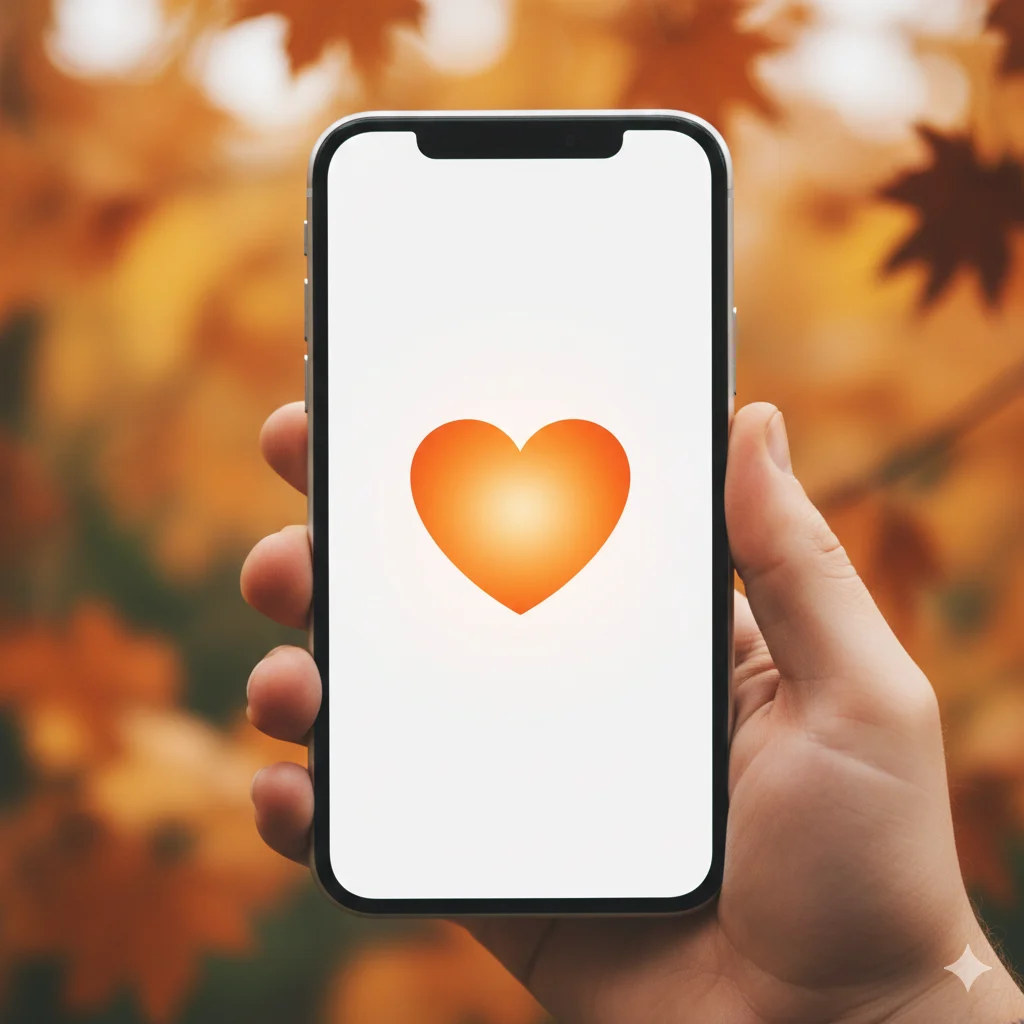
The Orange Heart emoji 🧡 means warmth, friendship, gratitude, and supportive love. It’s less romantic than a Red Heart ❤️ and more vibrant than a Yellow Heart 💛, making it a friendly, enthusiastic way to show you care.
Have you ever been scrolling through a text thread or a social media post and seen a bright orange heart pop up? It might have given you pause. “A red heart means love… a yellow heart is for friends… so what’s this orange one for?” I remember seeing it for the first time under a friend’s photo of a beautiful sunset. It felt warmer than a “like” but not as intense as a red heart. I was intrigued—and maybe a little unsure if I’d been using it right! If you’ve felt that same flicker of confusion, you’re not alone. The orange heart is a uniquely versatile symbol, and understanding its nuances can make your digital communication more colorful and precise.
🧠 What Does the Orange Heart 🧡 Mean in Texting & Social Media?
The Orange Heart emoji, 🧡, doesn’t have one rigid dictionary definition. Instead, its meaning is built from the emotional qualities of the color orange itself: enthusiasm, warmth, joy, creativity, and autumn coziness. It occupies a special middle ground in the heart-emoji spectrum.
Think of it this way:
- Red Heart ❤️: Deep romantic love, passion, strong familial love.
- Orange Heart 🧡: Warm, supportive affection, close friendship, gratitude, admiration.
- Yellow Heart 💛: Pure, platonic friendship, happiness, positivity.
When you send an orange heart, you’re often saying, “I care about you warmly,” “I’m so grateful for you,” or “This brings me joy.” It’s like giving someone a sincere, friendly hug or a beaming smile.
In short: 🧡 = Warmth & Friendship = A vibrant, supportive, and less romantically intense way to show you care.
📱 Where Is the Orange Heart 🧡 Commonly Used?
You’ll spot this cozy emoji lighting up screens across the digital world. Its friendly tone makes it a perfect fit for:
- Instagram & Facebook: Reacting to friends’ achievements, travel photos, or creative projects. Common in birthday posts or “thinking of you” stories.
- TikTok & Snapchat: Showing appreciation for a fun video, a cool outfit, or a relatable story. It’s very common in comments and replies.
- Texting & WhatsApp: The go-to for thanking a friend, sending encouragement, or ending a chat on a warm, positive note.
- Twitter/X: Used to express solidarity, support for a cause (it’s associated with multiple sclerosis awareness), or admiration without romantic undertones.
Tone: It is casual, social-media-friendly, and warmly affectionate. It’s generally not used in formal or strictly professional communications unless you share a very close, informal rapport with a colleague.
💬 Examples of the Orange Heart 🧡 in Conversation
Let’s see how it works in real chats.
1. For Gratitude & Thanks:
A: Hey, thanks for dropping off soup when I was sick. You’re the best.
B: Of course! Anytime 🧡
2. For Encouragement & Support:
A: So nervous for this big presentation today.
B: You’ve got this! Sending you all the good vibes 🧡
3. For Platonic Love & Friendship:
A: Couldn’t ask for a better friend. Seriously.
B: Right back at you 🧡
4. Reacting to Good News:
A: I got the job!!
B: YESSS! So incredibly proud of you!! 🧡🎉
5. Celebrating Creativity:
A: [Posts a painting they made]
B: The colors in this are stunning! You’re so talented 🧡
6. A Warm Sign-Off:
A: Okay, have a great trip! Talk when you’re back.
B: Will do! Thanks 🧡
7. Autumn & Cozy Vibes:
A: Perfect fall weekend: pumpkin patch, sweaters, and hot cider.
B: The ultimate cozy vibe 🍂🧡
✅ When to Use and When Not to Use the Orange Heart
Navigating when to send that orange pixel can be simple with these guides.
✅ When to Use the Orange Heart 🧡:
- To thank a friend or family member.
- To encourage or cheer someone on.
- To show platonic, non-romantic affection.
- To celebrate a friend’s achievement or creative work.
- To express warmth, enthusiasm, or autumn/cozy feelings.
- In comments on social media to show supportive appreciation.
❌ When NOT to Use the Orange Heart 🧡:
- In a formal business email or professional correspondence.
- In a message to someone you’re romantically interested in for the first time (it might send a “just friends” signal).
- During a serious, somber, or urgent conversation where an emoji may seem dismissive.
- If you know the recipient prefers clear, emoji-free communication.
| Context | Example Phrase | Why It Works (or Doesn’t) |
|---|---|---|
| Friend’s Achievement | “You graduated! So proud of you 🧡” | Perfectly conveys warm, supportive pride. |
| Thanking a Colleague | “Thanks for your help on that report! 🧡” | Use with caution. Only if you have a very informal, friendly work relationship. |
| Formal Email | “Thank you for your time.” | Do not use. Keep it professional and emoji-free. |
| Romantic Message | “I had a great time tonight 🧡” | Could be misinterpreted as a friendly, not romantic, sentiment. A red heart ❤️ is clearer. |
🔄 Similar Emojis & Color Heart Alternatives
The heart-emoji palette is rich! Here’s how 🧡 compares to its colorful cousins.
| Emoji | Name | General Meaning | Best Used For |
|---|---|---|---|
| ❤️ | Red Heart | Deep love, romance, passion, strong love. | Romantic partners, family, expressing intense love or passion. |
| 🧡 | Orange Heart | Warmth, friendship, gratitude, support. | Close friends, gratitude, encouragement, cozy vibes. |
| 💛 | Yellow Heart | Pure friendship, joy, positivity. | Your closest platonic besties, spreading happiness. |
| 💚 | Green Heart | Nature, growth, jealousy, support (in some contexts). | Environmental causes, expressing jealousy (“green with envy”), or support. |
| 💙 | Blue Heart | Trust, harmony, loyalty, support. | Showing solidarity (“I’m with you”), or for things you love that are blue. |
| 💜 | Purple Heart | Compassion, pride, luxury. | Showing deep admiration, LGBTQ+ support, or for luxurious things. |
| 🤍 | White Heart | Pure love, condolences, new beginnings. | Sympathy, innocence, or a clean slate. |
| 🖤 | Black Heart | Dark humor, sadness, edgy aesthetics. | Sarcasm, grief, or gothic/alternative style. |
🧡 The Orange Heart in Culture & Awareness
Beyond texting, the orange heart carries important symbolism. It is officially recognized as the symbol for Multiple Sclerosis (MS) Awareness and Kidney Cancer Awareness. During related awareness months, you’ll see it used widely to show support and solidarity for these causes. It’s also heavily associated with autumn, Halloween, and the cozy “hygge” feeling of fall.
🤔 Can the Orange Heart Be Flirty?
This is a common point of confusion. The short answer is: it’s ambiguous and can be risky as an initial flirty signal. Because its primary association is warm friendship, sending an orange heart to a crush might accidentally place you in the “friend zone” in their mind. If a romantic relationship is already established, an orange heart can be a sweet, lighter alternative to a red one. When in doubt, in early-stage romance, the red heart is the clearer choice.
👫 Orange Heart vs. Yellow Heart: What’s the Difference?
While both are friendly, think of 💛 Yellow Heart as your best, most joyful friendship emoji. It’s for your ride-or-die, your sunshine friends. The 🧡 Orange Heart carries a tone of deeper warmth, gratitude, and supportive care. It’s slightly more mature and nuanced than the yellow heart’s pure glee. You might use yellow with your childhood best friend in a silly meme thread, and orange to thank a friend who gave you great advice during a tough time.
📈 The Rise of the Orange Heart’s Popularity
The orange heart has seen a significant rise in use over the past few years. As online communication becomes more nuanced, people are moving beyond the simple “like” and the intense red heart to find emojis that better match the gradient of human relationships. The orange heart perfectly fills that gap for “more than a friend, less than a lover” or “deeply appreciated companion” sentiments.
❓ FAQs About the Orange Heart Emoji 🧡
What does a orange heart mean from a girl?
It typically means warm friendship, gratitude, or supportive affection. It’s not usually a direct romantic signal unless you’re already in a relationship.
What does a orange heart mean from a guy?
The same as from anyone: warmth, friendly care, and appreciation. Don’t over-gender the emoji; its meaning is based on your relationship context.
Is orange heart better than red heart?
It’s not “better,” it’s different. Use red for deep romantic or familial love. Use orange for supportive, friendly, or grateful love.
What does an orange heart mean on TikTok?
It usually means the creator really likes the video or comment. It’s a step above a regular like, showing enthusiastic appreciation and warmth.
Can I use an orange heart professionally?
It’s best to avoid it in most professional settings. Stick to words of thanks and encouragement unless your workplace culture is exceptionally casual and emoji-friendly.
💭 Conclusion:
In the vibrant language of emojis, the orange heart 🧡 is your go-to tool for spreading genuine, supportive warmth. It’s the digital equivalent of a heartfelt “thank you,” a supportive arm around the shoulder, or a shared smile over something beautiful. It deepens connections without the pressure of romantic intensity. So the next time a friend does something kind, a family member shares good news, or you want to add a cozy touch to your fall post, don’t hesitate—send that bright, warm orange heart. It’s a small gesture that says, “I see you, I appreciate you, and I care,” in the most wonderfully friendly way.

Mariah Cannon is an accomplished author and content creator, passionate about storytelling and delivering impactful messages. Through her writing, she explores themes of personal development, creativity, and the power of perspective. Her work is designed to motivate, inspire, and provide readers with practical insights for navigating life’s challenges while embracing growth and self-expression.